What Is a Low Histamine Diet?
A low histamine diet is a nutritional approach designed to reduce the amount of histamine entering the body through food. While histamine plays an important role in immune function, digestion, and communication within the nervous system, excessive histamine levels can contribute to a wide range of symptoms in susceptible individuals.
Many people associate histamine only with allergies, but histamine is actually a naturally occurring compound found throughout the body and in many foods. For individuals with Mast Cell Activation Syndrome (MCAS), histamine intolerance, mold-related illness, Chronic Inflammatory Response Syndrome (CIRS), and other chronic inflammatory conditions, managing dietary histamine intake can sometimes help reduce symptom burden.
A low histamine diet does not cure MCAS or histamine intolerance. Instead, it may help reduce the overall histamine load the body must process while underlying causes and contributing factors are addressed.
Who May Benefit From a Low Histamine Diet?
A low histamine diet is most commonly discussed in relation to histamine intolerance and Mast Cell Activation Syndrome, but several groups may potentially benefit from reducing dietary histamine exposure.
Individuals who may consider exploring a low histamine approach include those experiencing:
- Mast Cell Activation Syndrome (MCAS)
- Histamine intolerance
- Mold illness and CIRS
- Chronic Lyme disease and co-infections
- Chronic hives (urticaria)
- Unexplained food sensitivities
- Flushing and skin reactions
- Headaches or migraines triggered by food
- Gastrointestinal symptoms related to histamine-containing foods
Many people discover histamine issues only after noticing patterns between certain foods and symptom flares.
Understanding Histamine in Food
One of the biggest misconceptions about histamine is that it only exists in fermented foods. In reality, histamine levels can increase in many foods over time due to bacterial activity.
Histamine is produced when bacteria convert the amino acid histidine into histamine. This means that food freshness often plays a major role in determining histamine content.
As foods age, ferment, cure, smoke, or sit in storage, histamine levels may continue to rise.
This explains why some people react strongly to leftovers even when they tolerate freshly prepared versions of the same meal.
Understanding how histamine accumulates in food is one of the most important aspects of successfully following a low histamine diet.
Foods High in Histamine
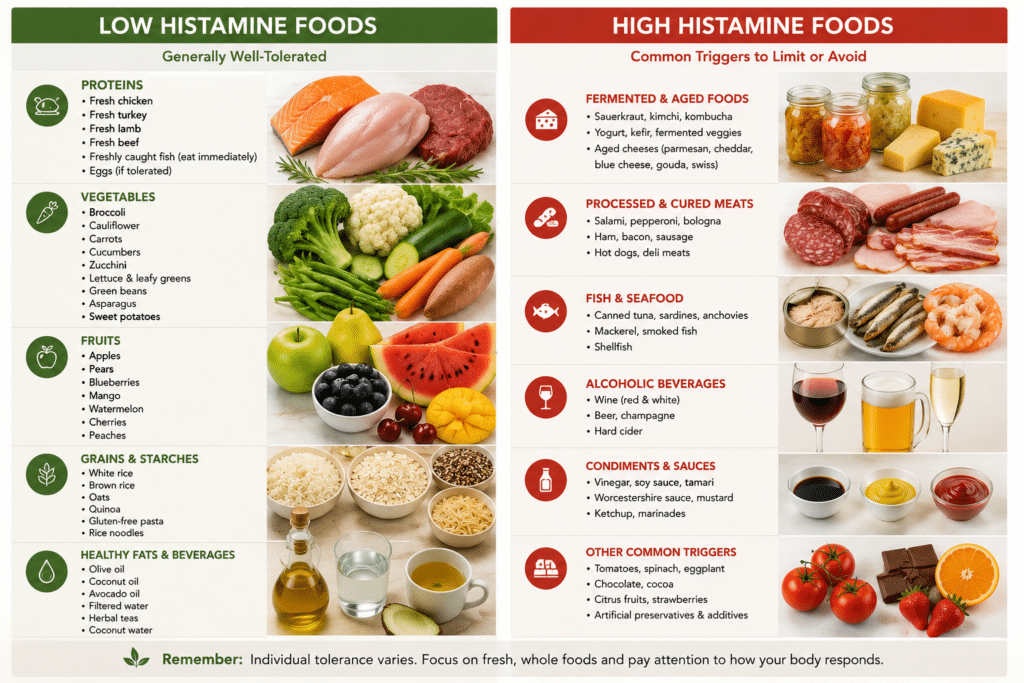
While tolerance varies from person to person, the following foods are commonly considered high in histamine.
Fermented Foods
- Sauerkraut
- Kombucha
- Yogurt
- Kefir
- Kimchi
- Fermented vegetables
Aged Foods
- Aged cheeses
- Parmesan
- Blue cheese
- Gouda
- Aged meats
Processed and Preserved Meats
- Salami
- Pepperoni
- Bacon
- Ham
- Smoked meats
Fish and Seafood
- Canned tuna
- Sardines
- Anchovies
- Mackerel
- Shellfish
Alcoholic Beverages
- Wine
- Beer
- Champagne
- Hard cider
Alcohol can be especially problematic because it not only contains histamine but may also interfere with the body’s ability to break histamine down efficiently.
Other Common High-Histamine Foods
- Tomatoes
- Spinach
- Eggplant
- Vinegar
- Soy sauce
- Chocolate
- Certain food preservatives
Not everyone reacts to every food on this list. Histamine sensitivity exists on a spectrum.
Foods Generally Considered Lower in Histamine
Many individuals find symptom improvement when focusing on fresh, minimally processed foods.
Common low histamine options include:
Fresh Proteins
- Fresh chicken
- Fresh turkey
- Fresh lamb
- Freshly cooked beef
- Freshly caught fish consumed immediately
Vegetables
- Broccoli
- Zucchini
- Carrots
- Cucumbers
- Lettuce
- Cauliflower
Fruits
- Apples
- Pears
- Blueberries
- Mango
- Watermelon
Carbohydrates
- Rice
- Sweet potatoes
- Oats
- Quinoa
The fresher the food, the lower the histamine content tends to be.
Why Leftovers Can Trigger Symptoms
One of the most surprising discoveries for many people is that leftovers often trigger symptoms more than freshly cooked meals.
Histamine production does not stop after food is cooked. As food sits in the refrigerator, bacteria can continue producing histamine.
Research evaluating food preservation methods found that freezing can significantly slow the formation of biogenic amines, including histamine. Veciana-Nogués and colleagues reported that freezing was associated with reduced histamine accumulation during storage compared with warmer storage conditions.1
While refrigeration slows this process, it does not completely prevent it.
For highly sensitive individuals, leftovers stored for several days may contain significantly higher histamine levels than when originally prepared.2
Many practitioners recommend freezing portions immediately after cooking if they will not be consumed within a short period of time.
Freezing dramatically slows bacterial activity and helps preserve food quality while minimizing additional histamine formation.
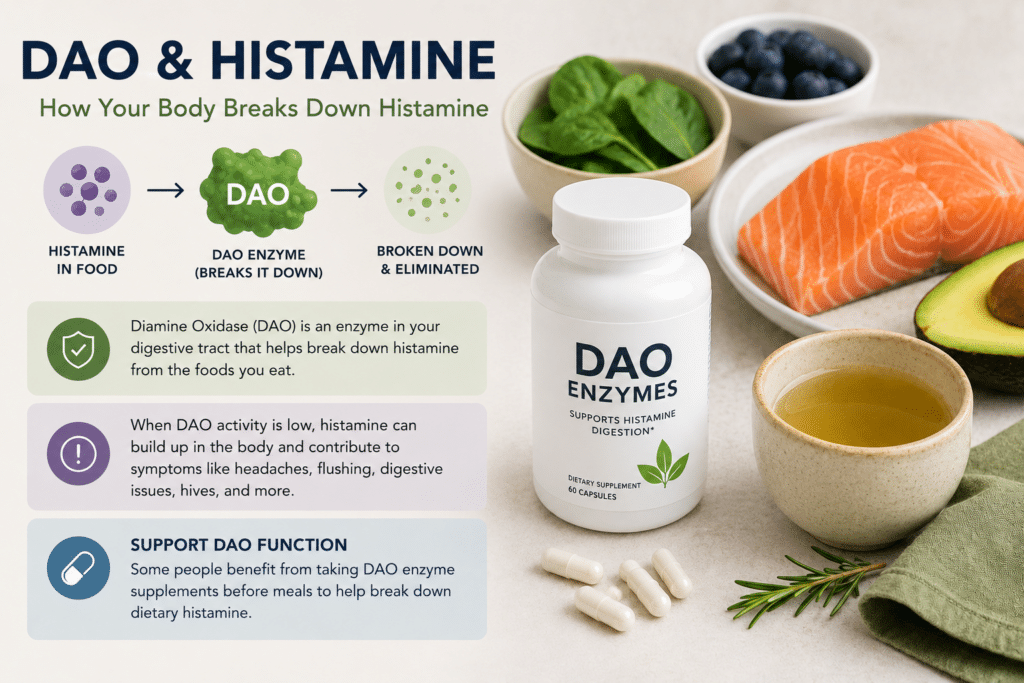
The Role of DAO (Diamine Oxidase) in Low Histamine Diets
Diamine Oxidase (DAO) is one of the body’s primary enzymes responsible for breaking down histamine within the digestive tract. When DAO activity is reduced, histamine may accumulate more easily and contribute to symptoms such as flushing, headaches, digestive upset, skin reactions, food sensitivities, and increased reactivity after meals.
Factors that may influence DAO activity include:
- Genetics
- Intestinal inflammation
- Gut dysfunction
- Nutrient deficiencies
- Certain medications
- Alcohol consumption2
DAO deficiency has been described as an imbalance between histamine exposure and the body’s ability to clear it. As Izquierdo-Casas and colleagues explain, histamine intolerance may result from “an imbalance between accumulated histamine and the capacity for histamine degradation.3
For some individuals, supporting DAO function may improve tolerance to histamine-containing foods. DAO enzyme supplements are sometimes taken shortly before meals to help break down dietary histamine and reduce the overall histamine burden entering the body. While responses vary, many individuals with histamine intolerance or MCAS report improved tolerance to certain foods when DAO supplementation is used appropriately.
Certain foods and beverages may also interfere with DAO activity. The International Society for DAO Deficiency notes that some foods can act as “DAO-blocking foods,” potentially reducing the body’s ability to metabolize histamine efficiently.4 For sensitive individuals, reducing exposure to these foods while addressing gut health and inflammation may improve symptom management.
Additional Support Before Meals
For individuals with Mast Cell Activation Syndrome (MCAS), reducing dietary histamine intake is often only one piece of the puzzle. Because mast cells can release histamine and other inflammatory mediators during digestion, additional support before meals is sometimes incorporated into a broader treatment strategy.
One commonly utilized approach involves taking DAO enzymes prior to eating. DAO helps break down histamine found in food before it can be absorbed and contribute to symptoms.
Another option sometimes used under physician supervision is Cromolyn Sodium, a mast cell stabilizer. Unlike antihistamines, which block histamine receptors after histamine has already been released, Cromolyn works by helping stabilize mast cells and reducing the release of inflammatory mediators in the first place. Some individuals take Cromolyn before meals to help reduce food-related mast cell activation and improve tolerance to eating.
It is important to recognize that these approaches do not work for everyone, and treatment must be individualized. However, when combined with a low histamine diet, trigger reduction, nervous system support, and treatment of underlying contributors such as mold exposure, chronic infections, or gut dysfunction, they may help reduce symptom flares and improve quality of life for some individuals struggling with MCAS and histamine intolerance.
Alcohol and Histamine
Alcohol presents a unique challenge for individuals struggling with histamine-related symptoms.
Alcohol may:
- Trigger histamine release
- Inhibit DAO activity
- Increase intestinal permeability
- Worsen inflammation
Research suggests alcohol can affect histamine metabolism through multiple mechanisms. Maintz and colleagues reported that alcohol may “inhibit diamine oxidase (DAO),” reducing the body’s ability to break down dietary histamine efficiently.⁵
Alcohol may also stimulate histamine release while simultaneously impairing histamine degradation. This creates a situation where histamine production increases while histamine breakdown decreases, potentially contributing to symptoms such as flushing, headaches, digestive upset, congestion, itching, and increased food reactivity.
Cooking Methods and Histamine Levels
Cooking methods can influence histamine content and food tolerance.
While cooking does not completely eliminate histamine, preparation methods can affect how foods are tolerated.
Research examining cooking methods and biogenic amine content found that histamine levels can vary depending on the cooking technique used and the type of food being prepared.⁶
Chung and colleagues concluded that cooking methods can influence biogenic amine concentrations, although the effects vary among different foods.⁶
General recommendations often include:
- Prioritizing fresh ingredients
- Cooking foods soon after purchase
- Avoiding prolonged storage
- Freezing leftovers promptly
- Limiting heavily processed foods
Fresh preparation remains one of the most important strategies for reducing dietary histamine exposure.
Sample One-Day Low Histamine Meal Plan
Breakfast
Fresh scrambled eggs with sautéed zucchini and blueberries. Duck and quail eggs tend to have less histamine than eggs from a chicken.
Lunch
Grilled chicken breast with white rice and steamed broccoli.
Snack
Apple slices with a handful of pumpkin seeds.
Dinner
Freshly cooked turkey with roasted sweet potatoes and carrots.
Beverage Options
- Water
- Herbal tea (stinging nettle and lemon balm are my favorite)
- Electrolyte drinks without additives
This example is intended for educational purposes and may need adjustment based on individual tolerance.
How Long Should You Follow a Low Histamine Diet?
A low histamine diet is typically used as a temporary tool rather than a lifelong restriction.
Many clinicians recommend an elimination phase followed by gradual reintroduction to identify personal tolerance levels.
The goal is not to avoid foods forever. Instead, the goal is to better understand which foods may contribute to symptoms while addressing the underlying factors that may be driving histamine intolerance or mast cell activation.
Because individual responses vary significantly, dietary changes should be personalized whenever possible.
Low Histamine Diet and MCAS
For individuals with Mast Cell Activation Syndrome, a low histamine diet can sometimes reduce symptom burden and improve treatment tolerance.
However, it is important to recognize that dietary histamine is only one piece of the puzzle.
MCAS often involves:
- Mast cell dysregulation
- Chronic infections
- Mold exposure
- Gut dysfunction
- Nervous system dysregulation
- Environmental triggers
Because of this, many treatment plans combine dietary strategies with broader approaches aimed at stabilizing mast cells and addressing root causes.
A low histamine diet may help lower the amount of incoming histamine, but it does not directly stop mast cells from releasing histamine and other inflammatory mediators.
A low histamine diet can be a valuable tool for individuals struggling with histamine intolerance, Mast Cell Activation Syndrome, mold-related illness, and chronic inflammatory conditions.
By focusing on fresh foods, minimizing high-histamine foods, understanding DAO function, and paying attention to food storage practices, many individuals are able to better understand their triggers and reduce symptom burden.
While dietary changes can be helpful, lasting improvement often requires a broader approach that addresses the underlying factors contributing to histamine overload and immune dysregulation.
References
- Veciana-Nogués MT, Mariné-Font A, Vidal-Carou MC. Effect of freezing and storage conditions on biogenic amine formation in foods. 2004. Available from: https://pubmed.ncbi.nlm.nih.gov/16260192/
- Maintz L, Novak N. Histamine and Histamine Intolerance. American Journal of Clinical Nutrition. 2007;85(5):1185-1196. Available from: https://pmc.ncbi.nlm.nih.gov/articles/PMC5346110/
- Izquierdo-Casas J, Comas-Basté O, Latorre-Moratalla ML, et al. Low Serum Diamine Oxidase Activity Levels in Patients with Migraine. Clinical Nutrition. 2013. Available from: https://pubmed.ncbi.nlm.nih.gov/23814966/
- International Society for DAO Deficiency. DAO-Blocking Foods and Histamine Metabolism. Available from: https://www.deficitdao.org/en/dao-deficiency/histamine/food-which-interferes-in-histamine-metabolism/dao-blocking-foods/
- Maintz L, Yu CF, Rodriguez E, et al. Histamine and Alcohol Interactions. Available from: https://pubmed.ncbi.nlm.nih.gov/10344773/
- Chung BY, et al. Effects of Cooking Methods on Histamine and Biogenic Amine Concentrations in Foods. Available from: https://pubmed.ncbi.nlm.nih.gov/29200758/